


Exam Prep Course Curriculum & Resources
We strongly encourage you to access and work with this webpage using a computer for the best experience.
Here, you will find all the essential materials and resources neatly organized for our enrolled CNS candidates. We aim to keep everything accessible and user-friendly, ensuring you have everything you need to succeed. Happy studying!
The CNS examination contains 200 multiple-choice, single-answer questions, and will cover the broad spectrum of basic and applied nutritional science. Themes such as fundamental principles on nutrition, nutrients and human health, nutrition assessment, clinical intervention and monitoring, professional issues, epidemiology, biochemistry, and integration of these areas, are threaded throughout the examination.
The Examination Content Outline (see below) is the key tool for preparing for the examination. It should be used to identify areas of strengths and weaknesses. Due to the breath of topics covered, it is likely most candidates will require preparation in one or more content areas.
Important to Know About Your Exam
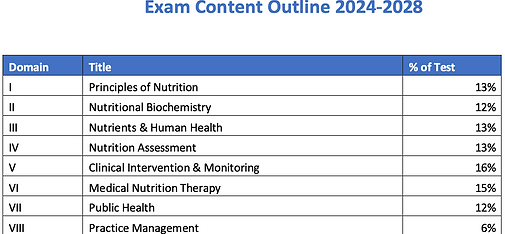
Detailed Exam Outline
Exam Scoring Method
Exam Process
CNS Exam Content Self-Assessment
Exam Prep Course Orientation Recording is Here

Orientation Live Recording 8.8.2026
Domain Resources
December 2026 Exam Prep Course Curriculum
Prep Course is from August 8 to November 28
*All live prep sessions are held online every other
Saturday at 10:00 am (ET) and will be recorded
August
8
Orientation (Live Online Session)
Prep Course Structure
Exam Content Outline & Domain Weights
Exam Prep Curriculum Overview
Setting Up Study Groups and How to Utilize
Study Techniques, Exam Tips & Pacing
Using Quizzes, Case Studies, and Support Resources
August
15
Module 1 (On Your Own/Study Group)
Domain I: Principles of Nutrition & Lifecycle
Practical application of evidence-based research
Tailoring of assessment and therapy specific to life cycle stage
Nutritional considerations related to psychological and social factors associated with life cycle stage
Effects of age, gender, and physical activity on body composition and energy expenditure
Disease risk and prevalence related to socioeconomic status, geographic residency, ethnicity, and life cycle stage
Nutritional considerations related to psychological and social factors associated with life cycle stage and physiologic changes associated with life cycle stage
Calculation of individual caloric requirements
Estimation of caloric values of specific meals
August
Module 2 (On Your Own/Study Group)
Domain I: Principles of Nutrition - GI & Inflammation
Digestion, absorption, and transport of macronutrients and micronutrients
Physiology of the digestive tract (motility, absorption, secretion, intestinal barrier function)s
Effect of microbiome on body composition and metabolism
Effect of microbiome on metabolism of macronutrients and micronutrients, including use of probiotics and prebiotics
Inflammatory pathways, including insulin, oxidative stress, and fatty acid oxidation
Regulation of fluid, electrolyte, and acid-base balance
August
22
Live Online Review Session
Domain I: Principles of Nutrition
Open Forum Discussion/Q & A
August
Module 3 (On Your Own/Study Group)
Domain II: Nutritional Biochemistry - Energy Metabolism
Metabolism (biochemical pathways and reactions) of carbohydrates, lipids, proteins, and micronutrients
Nutritional biochemical pathways, including energy production and detoxification
Role of oxidative stress and detoxification pathways on health status
Lipid metabolism, including cytokine and eicosanoid pathways
August
Module 4 (On Your Own/Study Group)
Domain II: Nutritional Biochemistry- Genomics & Epigenetics
Chemistry of enzymes, co-factors, and organic acids
Basic understanding of nutritional genomics research in practice
Impact of nutritional genomics on health
Epigenetics: methyl donor biochemistry and hypo and hyper methylation specific to life cycle stage
September
5
Live Online Review Session
Domain II: Nutritional Biochemistry
Open Forum Discussion/Q & A
September
Module 5 (On Your Own/Study Group)
Domain III: Nutrients & Human Health - Macronutrients & Micronutrients (Water & Fat Soluble Vitamins)
Macronutrient and micronutrient food sources and impact on health
Nutrient deficiency and insufficiency: causes, symptoms, and treatment
Role of oxidative stress and detoxification pathways on health status
September
Module 6 (On Your Own/Study Group)
Domain III: Nutrients & Human Health - Macronutrients, (Fiber) and Micronutrients (Minerals)
Macronutrient and micronutrient food sources and impact on health
Nutrient deficiency and insufficiency: causes, symptoms, and treatment
Role of oxidative stress and detoxification pathways on health status
Structure and function of soluble and insoluble fiber and its impacts on health
Malabsorption and effects on macronutrients and micronutrient status
September
20
Live Online Review Session (Note: this session is offered on Sunday)
Domain III: Nutrients & Human Health
Open Forum Discussion/Q & A
September
Module 7 (On Your Own/Study Group)
Domain III: Nutrients & Human Health - Food Processing/Functional Foods/ Supplements/Upper Intake Levels/DRI's
Impact of agricultural methods and food processing, preparation, and storage on nutrient value
Nutrients used in fortification and applicable food sources
Functional and medical foods and their impact on health
Role of key phytochemicals and zoochemicals in health
Good manufacturing practices and other quality markers for nutritional supplements
Appropriate use of nutrient supplementation
Supplemental sources of nutrients
Dietary Guidelines and Dietary Reference Intakes for preventive and therapeutic interventions
Tolerable upper intake levels of nutrients
Nutrient toxicity: causes, symptoms, and treatment
October
Module 8 (On Your Own/Study Group)
Domain IV: Nutrition Assessment
Comprehensive medical nutrition health history
Use of behavior change strategies such as Motivational Interviewing and Stages of Change Theory
Computerized analysis of food intake
Body composition analysis (skin fold, bioelectrical impedance, waist-to-hip, BMI, other)
Linking childhood behaviors to obesity and other chronic health issues in adults
Effects of disordered eating patterns on nutrition status, body composition, and body functions
Identify signs and symptoms of nutrient status
Lifestyle factors that impact nutrient needs and compliance, such as exercise, stress, and sleep
Identification of symptoms that require medical referral
October
3
Live Online Review Session
Domain III & Domain IV
Open Forum Discussion/Q & A
October
Module 9 (On Your Own/Study Group)
Domain IV: Nutrition Assessment - Labs/SNPs
Evaluation of laboratory data, including identification of optimal value ranges
Evaluation of functional testing (organic acid, stool, and saliva tests for adrenals and hormones)
Evaluation of hormonal and neurotransmitter imbalances based on laboratory assessment
Assessment of single-nucleotide polymorphisms (SNPs)
Nutritional inborn errors of metabolism
October
Module 10 (On Your Own/Study Group)
Domain V: Clinical Intervention & Monitoring - Diets & Drugs and Nutrient Interactions
Consideration of the client's personal and cultural beliefs when developing nutrition intervention plans
Application of national guidelines, policies, consensus recommendations, and evidence-based research in the development of personalized therapeutic interventions
Effectiveness and contraindications of various diets
Interactions between drugs and foods, alcohol, vitamins, minerals, herbs, phytochemicals, and zoochemicals
Nutrient depletions related to commonly used drugs
Gauging and optimizing client compliance
October
17
Live Online Review Session
Domain IV & Domain V
Open Forum Discussion/Q & A
October
Module 11 (On Your Own/Study Group)
Domain V: Clinical Intervention & Monitoring - Nutrition & Herbal Therapies
Evidence-based dose and duration of nutraceutical use for common conditions
Synergistic effects and antagonistic interactions of nutrients in foods and supplements
Drug/herb action, duration of action, purpose, and dose of a client's current therapeutic regimen
Evidence-based use of common botanical supplements for health promotion and common conditions
Safety, toxicity, and interactions of botanical supplements
October
Module 12 (On Your Own/Study Group)
Domain VI: MNT
MNT for gastrointestinal disorders
MNT for food allergies and intolerances
MNT for autoimmune disorders
MNT for mental health/mood disorders
MNT for insulin resistance and type 2 diabetes
MNT for cardiovascular disease, dyslipidemias, and hypertension
MNT for endocrine disorders
MNT for obesity
MNT for cognitive and neurodegenerative disorders
MNT for hepatic disorders
MNT for neurodivergence
November
1
Live Online Review Session (Note: this session is offered on Sunday)
Domain V & Domain VI - Case Studies
Open Forum Discussion/ Q & A
November
Module 13 (On Your Own/Study Group)
Domain VI: MNT
MNT for dermatological disorders
MNT for bone disorders
MNT for type 1 diabetes
MNT for cancer
MNT for renal disordersMNT for hematologic disorders
MNT for mastication, swallowing, and nutrient absorption disorders
MNT for pulmonary disorders
MNT for surgical procedures
MNT for communicable diseases and sequalae
MNT for bariatric surgery
November
Module 14 (On Your Own/Study Group)
Domain VII: Public Health
Impact of environmental toxicity on health
Translation of nutritional epidemiology into practice
Factors that negatively affect food quality and safety
Causes and preventative measures for common foodborne illnesses
Identification of populations at risk for food safety issues
Tracking current outbreaks of food borne illness and communication with clients
November
14
Live Online Review Session
Domain VI & VII (Includes Case Studies)
Open Forum Discussion/Q & A
November
Module 15 (On Your Own/Study Group)
Domain VIII: Practice Management
Compliance with ethical standards
Working within scope of practice and in collaboration with other healthcare professionals as needed
Evaluate sources of nutrition information for trustworthiness and bias
HIPAA compliance requirements
Licensure and certification
Cultural competency and mitigating implicit bias
Insurance coverage and reimbursement
November
28
Module 16: Live Online Review Session
Domain VIII - Putting It All Together
Open Forum Discussion/Q & A
Additional Studying Resources
Book & Kindle Resources
Krause and Mahan’s Food and the Nutrition Care Process (Krause's Food & Nutrition Therapy) 16th Edition
by Janice L Raymond MS RDN CSG (Author), Kelly Morrow MS RDN FAND (Author)
Burgerstein's Handbook of Nutrition: Micronutrients in the Prevention and Therapy of Disease by Michael B. Zimmermann (2001-07-11)
Medical Nutrition & Disease: A Case-Based Approach 5th Edition
by Lisa Hark PH.D. R.D. (Author), Darwin Deen (Author), Gail Morrison M.D. (Author)
Other Text Recommendations
-
Mahan LK, Raymond JL. Krause’s Food & the Nutrition Care Process. Elsevier.
-
Nelms M, Sucher KP. Nutrition Therapy and Pathophysiology. Cengage.
-
Gibney MJ, et al. Introduction to Human Nutrition. Wiley-Blackwell.
-
Ottaway PB. Food Fortification and Supplementation. Woodhead Publishing.
Exam Tips & Strategies
To achieve a good exam score, it’s essential to apply effective test-taking strategies. Start by reading questions carefully and eliminating answers you know are incorrect. This approach will help you focus the best remaining choice based on the facts. Additionally, managing your time wisely and avoiding stress are crucial for optimal performance on exam day.
For more insight to these strategies, click below.
Domain VIII Live Session Recording Will Go Here


Live Review - Domain I - August

